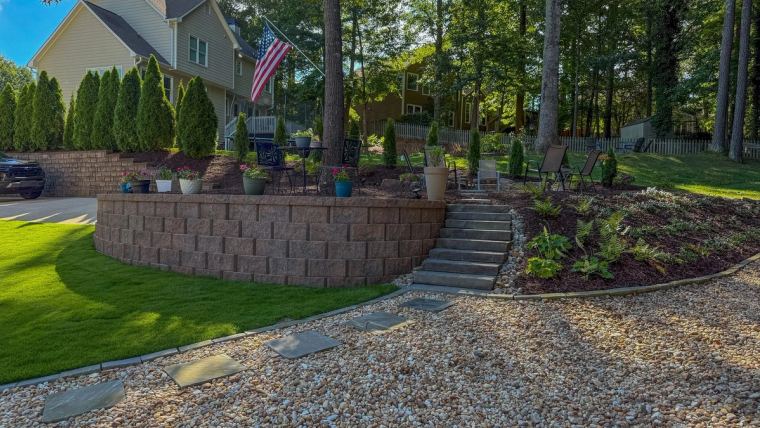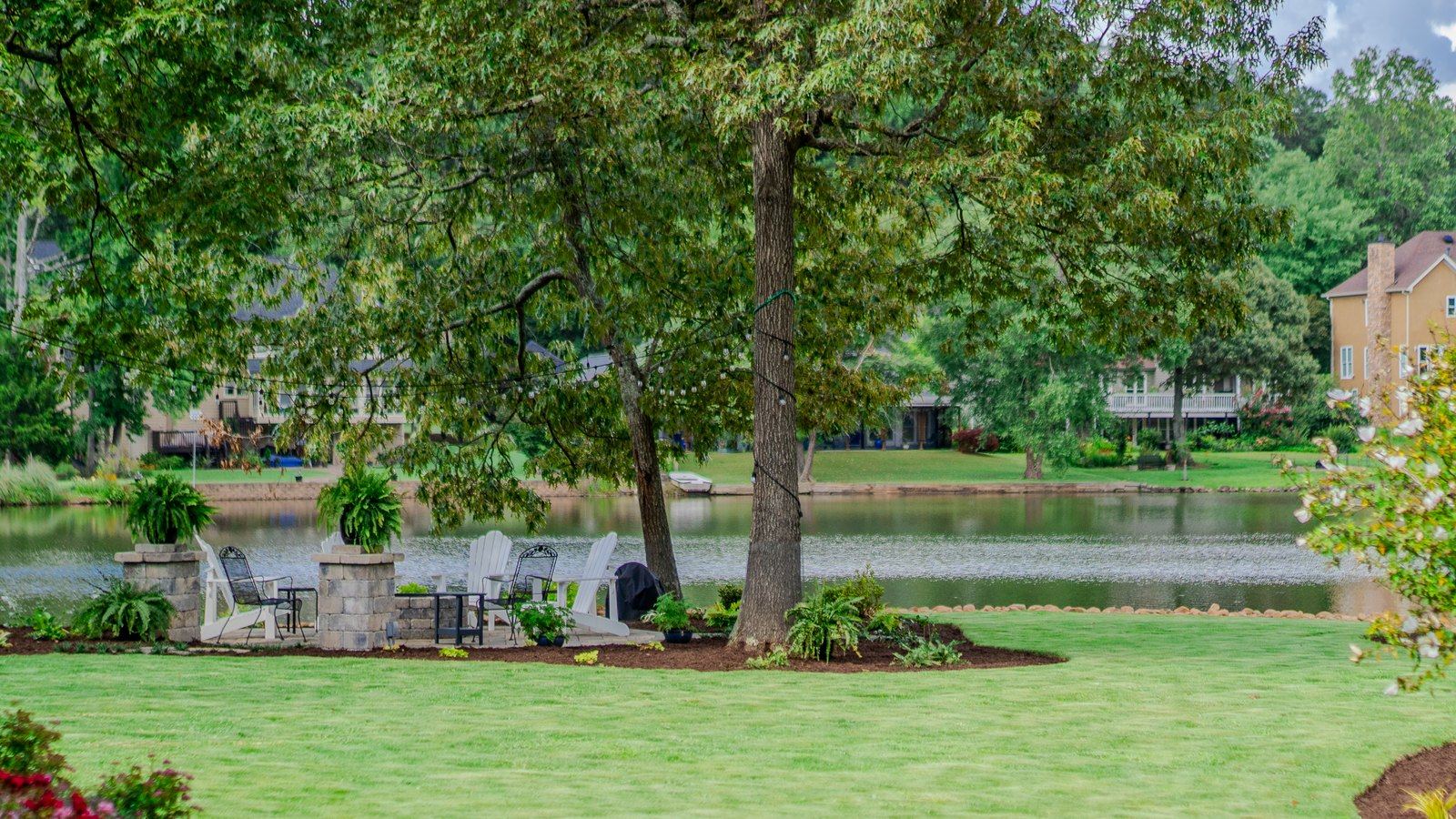
When a homeowner in Woodstock or Canton calls me and says they just want a nice lawn, I ask one question before anything else. What grass do you think you have now, and what condition is it in?
Their answer tells me something. The lawn itself tells me more. The real evaluation starts the moment I pull up and see the grass, because in my experience the lawn has usually already written its own diagnosis. I just have to read it.
Sunlight Decides Before You Do
The first thing I look for is sunlight. In my experience it is the biggest factor in whether a Georgia lawn thrives or slowly falls apart.
Here is the pattern I see constantly. A yard gets just enough sun to keep the Bermuda alive, and you can tell it is thinning out. Once it thins, runoff rushes through faster and takes the topsoil with it. The process snowballs. What looks like a grass problem is actually a soil and sunlight problem wearing a grass costume.
This is easy to miss, and the homeowner often did nothing wrong. When the lawn went in ten or fifteen years ago, Bermuda was a good call. Then the trees matured. The shade spread. The yard changed around the grass, and now that grass is fighting a battle it cannot win.
I tell clients plainly: you can have pretty Bermuda grass or pretty trees, and you have to pick. Pruning the trees buys time, and that is all it buys. It is a temporary fix for a permanent condition.
My rule is six hours. If the whole space receives less than six hours of direct sunlight, I recommend a change. That is close to what UGA Extension publishes. Bermuda does best with 8 or more hours of direct sun each day, while some zoysia varieties hold acceptable color on as little as 4 to 4.5.
Where Bermuda Still Wins
Bermuda earns its place in two situations: full sun and big square footage.
The reason is simple. Bermuda is cheaper. On a typical job right now the gap runs 200 to 300 dollars per pallet compared to zoysia, and on a large open backyard in Acworth that difference adds up fast. When both grasses will perform well in full sun anyway, the budget often makes the call.
Bermuda loves heat, spreads aggressively, and recovers from traffic. For a big sunny yard with kids and dogs, it remains the practical choice. The sunlight requirement is the catch. If your yard has large shade trees, Bermuda thins out and struggles in those areas, and no amount of fertilizer fixes a light problem.
Zoysia: The Carpet Upgrade
From the outside, zoysia and Bermuda look like cousins. Both are thin-bladed. Both spread through rhizomes. Both love heat and both go dormant in winter.
The differences show up underfoot. Zoysia runs a little greener and softer, like a carpet, and it grows slightly slower. It also tolerates more shade, performing well in dappled sunlight under partially shaded tree canopies. That makes it my go-to when a yard has matured past what Bermuda can handle but still gets real sun.
One expectation I always correct up front: homeowners hear "slower growing" and picture fewer Saturday mornings behind a mower. The mowing schedule stays close to the same. Once a week is the minimum either way. Zoysia does ease the fertilizer load: UGA Extension puts it at about 1 to 3 pounds of nitrogen per 1,000 square feet per year compared to Bermuda's 2 to 5. That lighter feeding schedule narrows the long-term cost gap more than people expect.
Fescue Is a Specialty Pick, and I Mean That Literally
I recommend fescue in very few situations. All of these conditions need to be true at the same time:
- The yard has heavy shade.
- The client wants an evergreen lawn through winter.
- The space will see very little foot traffic.
- The client will care for it diligently or does not mind paying real maintenance costs.
Miss any one of those and the Georgia summer will expose the mistake. We only install fescue in the fall, because the summer stress test is brutal. Once summer heat settles in, fescue's growth slows and the grass becomes vulnerable to heat stress, which opens the door to brown patch fungus through the warm, humid months. By midsummer a struggling fescue lawn thins significantly, demands heavy water, and then demands fungicide because of all that water.
The fungicide bill is what catches people off guard. If a homeowner has no prior grass experience, nobody told them what they were signing up for. The frustration that follows has little to do with fescue being a bad grass. It comes from choosing a high-maintenance grass without knowing the maintenance existed. My job is to name that commitment before anyone commits.
Shrink the Lawn or Replace the Grass
When I stand in a thinning Bermuda yard and I know the trees are not going anywhere, the conversation comes down to a fork.
Sometimes the answer is expanding the planting beds and reducing the amount of grass, keeping only the areas that are genuinely thriving. A smaller, healthy lawn beats a bigger, struggling one almost every time, and the beds give those mature trees room to be the feature they already are.
Other times the answer is a full replacement with fescue or the right variety of zoysia. The six-hour threshold is what pushes me from one path to the other. Below six hours of direct sun across the whole space, I recommend a change in grass. Above it, we can usually work with what is there.
Read the Yard, Then Pick the Grass
The pattern behind every one of these decisions is the same. The yard sets the terms first. Sunlight, soil, square footage, and the homeowner's honest appetite for upkeep narrow the field before taste ever gets a vote.
A lawn is a system you keep reading and responding to, season after season. The trees keep growing. The shade keeps moving. The grass that made sense a decade ago deserves a fresh evaluation today.
So before you order pallets of anything, stand in your yard at ten in the morning, again at one, and again at four. Count the hours of direct sun. Be honest about how much mowing, watering, and feeding you will actually do. The right grass is the one your yard can sustain and you can live with, chosen before looks get a vote.
If you are staring at a thinning lawn in Cherokee County and trying to decide which way to go, start with that sunlight count. It will answer most of the question for you.